Retail is tight. The middle units are still dark.
National shopping-center vacancy sits near 5%, close to a 20-year low. First-quarter 2026 still closed with negative absorption, so the headline number hides units that do not lease.
Mid-strip space built for a restaurant or a big-format retailer often needs a hood, a grease trap and venting before it can serve the tenants now asking for space. A dark unit keeps paying tax, insurance and common-area charges, and it tells shoppers and lenders the center is slipping.
Sources: Schuckman Realty, June 2026, citing CRE Daily and Matthews; Cushman & Wakefield U.S. Shopping Center MarketBeat, Q1 2026; CoStar News, May 2026; QSR Magazine, February 2026.
Six seats that fit a storefront.
- Seating
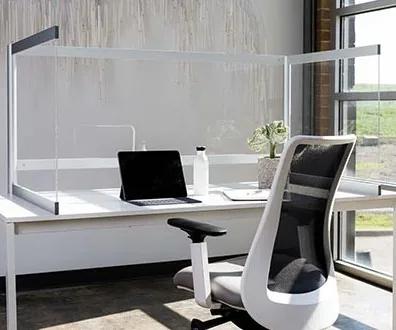
- Six stations. Cafeteria-style tables bolted in an I formation, a clear acrylic panel at every seat, and an ergonomic black mesh chair.
- Unit
- 1,000 to 3,000 SF with 12 ft ceilings.
- Power and data
- 120-volt outlets at every station. Fast internet from a ceiling drop.
- Light
- Ceiling fixtures that approximate daylight, plus a task lamp at each seat. No fluorescent.
- Sound
- Optional background music chosen for focus, controlled locally.
- Access
- Card reader at the front door.
- Amenities
- Restroom, wet bar, printer station and office supplies.
The pod bolts together on site with no custom millwork, so installation is planned in days, not months.
This is not coworking. There are no memberships and no drop-ins. A pod serves one cohort of six people who can work for different employers, in a room close to home.
Prototype specification. Final configuration is confirmed with the first location.
A new tenant category for the unit nobody else wants.
You do not need to find the employer. You need to spot the dark door.

- 1
Flag the unit
You already know which mid-strip unit has been dark the longest. Check it against the unit-fit checklist.
- 2
Send us the basics
Address, square footage, months dark and a few photos. We tell you within a week whether it fits.
- 3
We install and find the employer
Team Base supplies and installs the pod and sells to employer real estate and HR teams. You keep the client relationship.
How the money works
The employer rents the pod from the property owner under a direct rental agreement. Team Base supplies and installs it.
Broker referral
15% of first-year rent equivalent for the broker who brings the unit. Final terms are confirmed per deal.
A near-home place to work that does not depend on a five-day mandate.
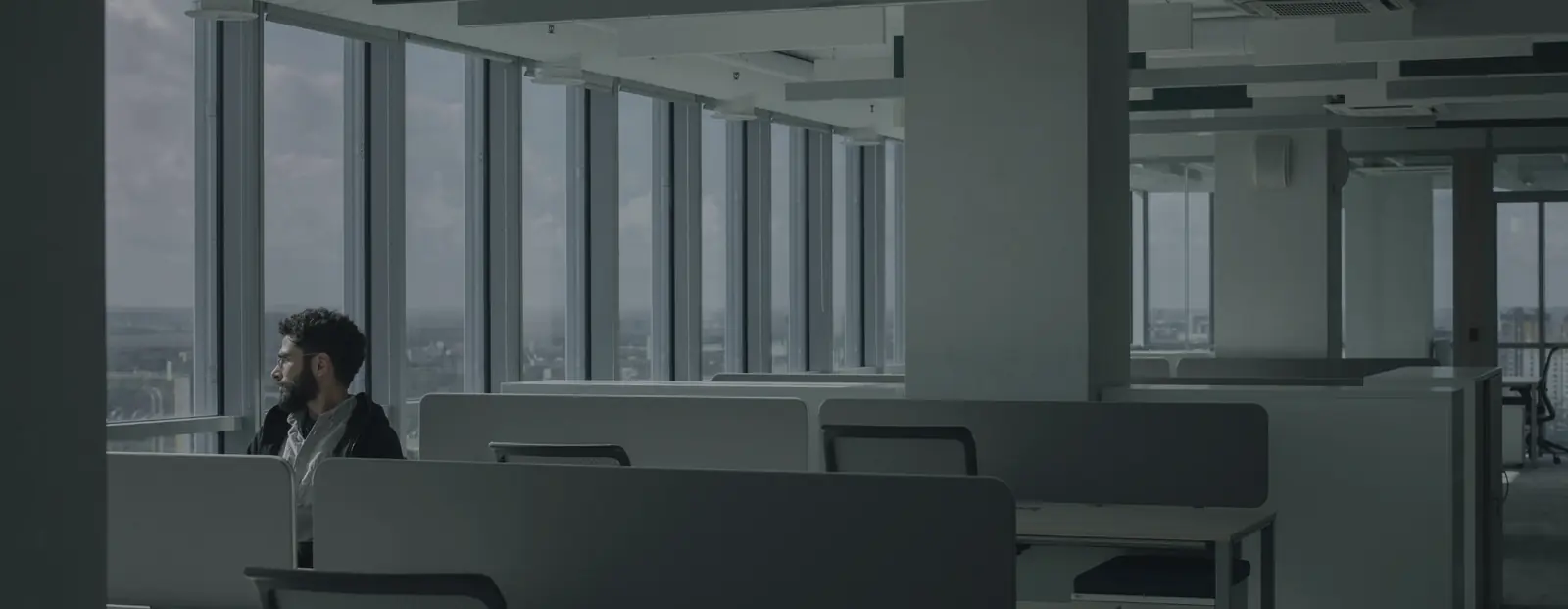
Remote and hybrid staff get a quiet, card-access room within a short drive of home, working beside five others. Your corporate real estate team adds a small footprint without a long lease. Your division managers keep the people they have trained.
Replacing one employee commonly costs half to two times their annual salary, and more for specialists. The know-how leaves with them even when the code stays.
Get the cost-of-churn briefSources: FMC Group, 2026; Bloom, Han and Liang, Nature, 2024; Gallup.
The first lit door is still open.
Team Base is raising prototype funding and has not installed a location yet. The property that hosts the first pod becomes the founding location.
Better terms than later locations, agreed up front.
The referring broker and the property owner are named as founding partners.
For the broker who brings the unit, with final terms confirmed per deal.
Pick your role. Get the file that fits.
Brokers and owners get the two-page unit-fit checklist. Employers get the cost-of-churn brief, with a worksheet to size your own exposure.
Prefer to talk? Call 512.799.4676.